Mule Deer - J Zumbo
It's
said that Lewis and dark gave the mule deer Its name because it reminded
them of a deer with large mule-like ears. This is strictly a western
animal that lives in every western state and in western Canada. Commonly
called the "muley," this deer inhabits more open country than
elk, preferring to be in brush and drier country, Nonetheless, muleys
are amazingly adaptable and live in habitats from lowland deserts to
alpine tundra above timberline.
Mule deer populations are often ravaged
by severe winters when deep snows blanket their forage and extreme cold
saps their energy. These massive declines are cyclic, and herds bounce
back during years of mild winters. Muleys are migratory, often traveling
long distances from high summer ranges to lowland winter areas where
snow is not as deep and food Is more available.
|
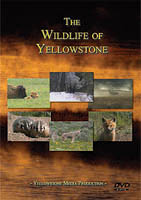
"The
Wildlife of Yellowstone"
- 94 Minutes
-
The
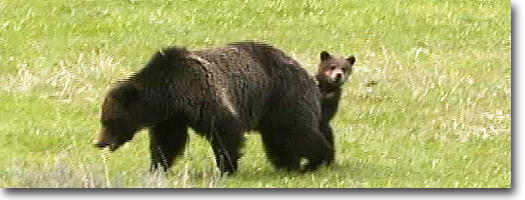
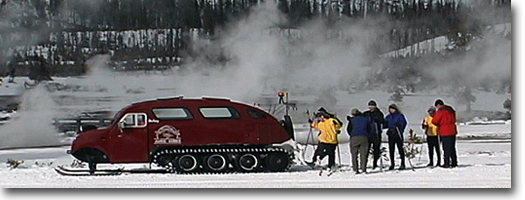
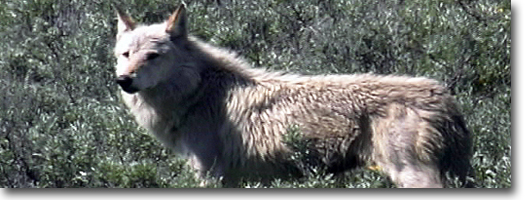
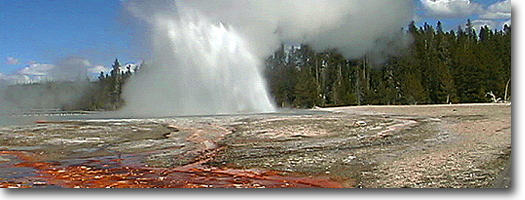
Wildlife of Yellowstone DVD presents to you the most popular and
prominent wildlife inhabiting Yellowstone National Park. This
dvd, taped in digital format, has the highest quality scenes of
grizzlies, black bears, moose, wolves, otters, owls, fox and much
more including their young. Inside this dvd you will find
·
94 Minutes on the Wildlife of Yellowstone.
· Three Chapters : Large Mammals, Small Mammals and Birds
· Narrated by Yellowstone Tour Owner and Specialist - Ken
Sinay
· Where, When and How to Spot the Wildlife of Yellowstone
More
Info or Order Online |
You can expect to see mule deer anywhere
around Yellowstone, but especially in sagebrush areas. In the summer
you'll see them high in the mountains, often in fields of wildflowers
or along rocky, brushy slopes. Along rural roads you'll often spot them
feeding in fields, especially in alfalfa, one of their favorite summer
foods. In the
late spring and summer, look for animals
with rust-colored fur. In the early morning and late afternoon, they
appear to be almost orange. In the fall, this summer coat is shed and
deer then take on a gray winter pelt. In sunshine, their distinctive
white rumps are often the first thing you'll see.
Unlike male whitetails, the antlers of
mature mule deer bucks typically have double forks that are often high
and wide. Young bucks may have single, spike-like antlers or small single-forked
antlers. Here's where you can see mule deer. In Yellowstone, most deer
are seen in the drier habitat from Gardiner and Mammoth out toward the
Lamar Valley. The best time to view deer here Is in late fall when they
migrate to lower elevations to seek does and find more food. Muleys
live in scattered locations in the park, and you're apt to see them
anywhere in the summer. Outside the park, look for them in the Driggs-Victor
area in Idaho, as well as in the sagebrush country west of Freedom,
Wyoming. A prime spot to see them is along the Chief Joseph Highway,
especially in the area along the dark Fork River. Another superb region
is around Roscoe, Montana, and along the rural roads and farm fields
there.
Whitetail Deer
Many
people believe whitetails are an "eastern" species, but they
thrive in the west. These are the most common deer in America, so named
because of their huge tails that are brown on top and white below. When
a whitetall is running from danger, it "flags" its tail, waving
it about and signaling other animals.
A buck's antlers typically have a pair
of curved main beams with several tines growing off each. In the fall,
bucks fight viciously in a battle of dominance to win does. Like mule
deer, whitetails breed from mid-November to mid-December.
Unlike mule deer, whitetails are much
more at home around people. Some live all their lives on a relatively
small chunk of landscape no bigger than 30 or 40 acres. Whitetails are
fond of farmlands and are mostly seen in agricultural areas.
There are occasional reports of whitetails
in Yellowstone, but they're very rare. You can see plenty along the
Yellowstone River along 1-90. Look for them in agricultural areas around
Powell and Lovell east of Cody, Wyoming. There are also good numbers
of them around dark, Wyoming.
|